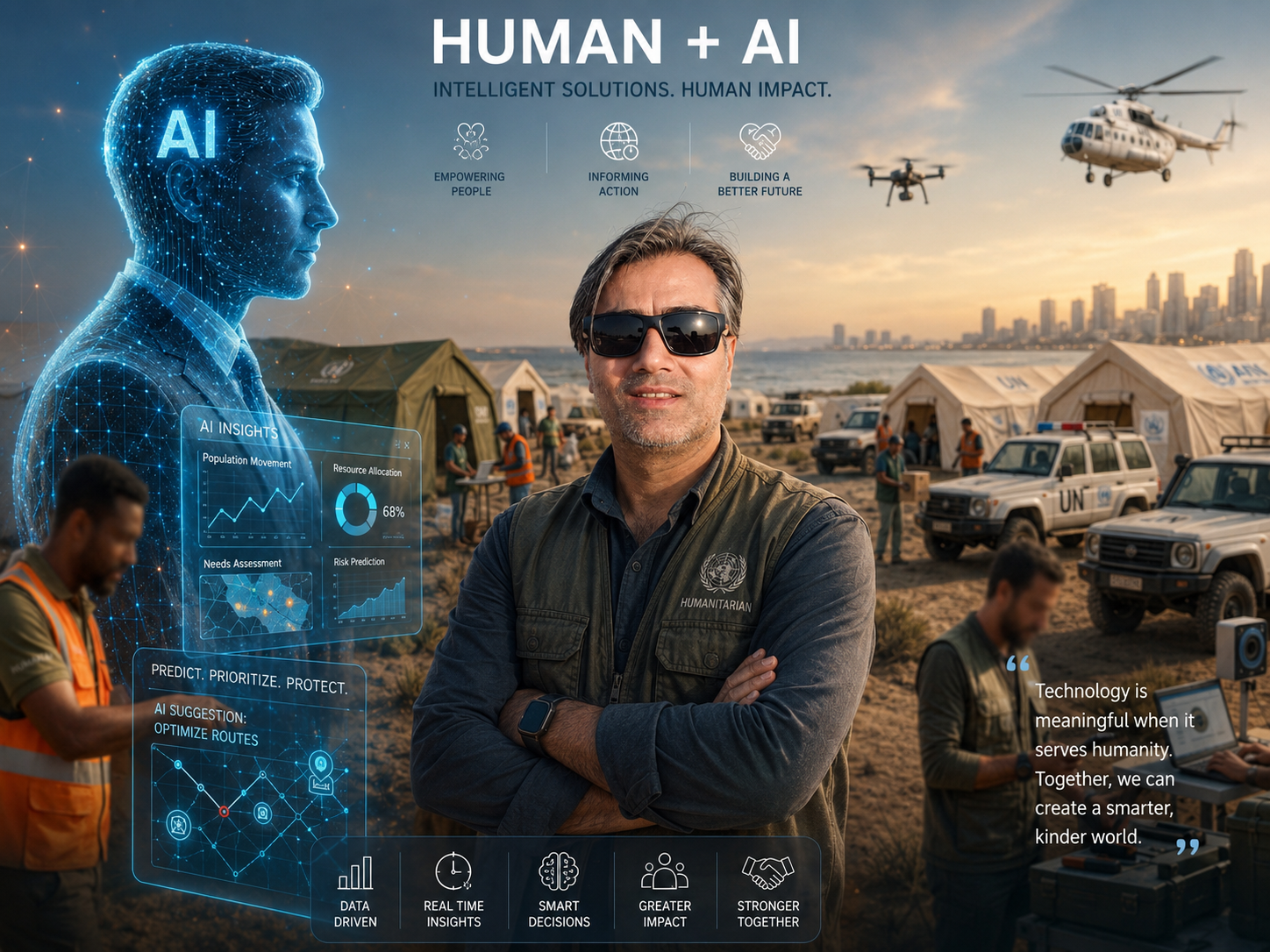
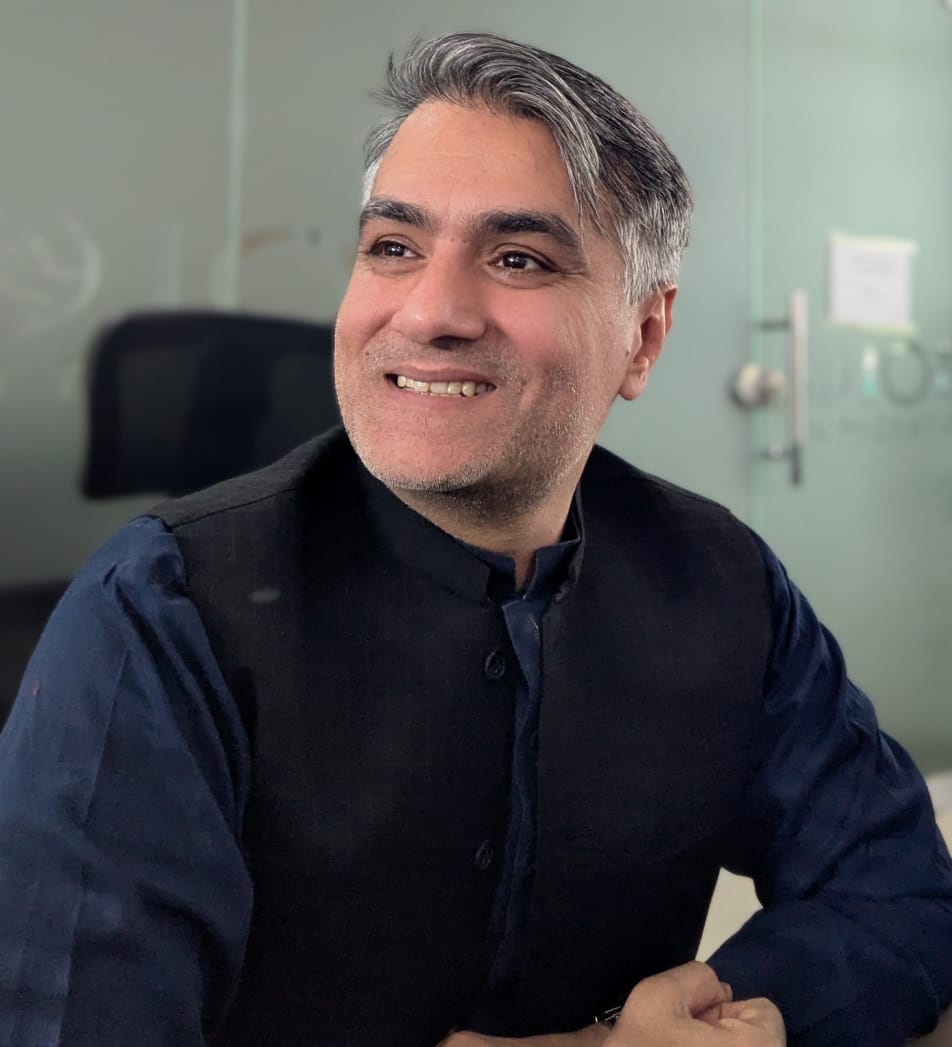
Arshad Khan
ICT Project Manager & Digital Transformation Leader
- Delivering results under extreme pressure in post and active conflict zones with resilience and accountability.
- Delivering AI powered, scalable solutions that work seamlessly in the field — designed for real world adoption under pressure.
- English · French · Pashto · Urdu and more
- MBA — Information Technology (USA)
- IOM · UNDP · UNHCR · UN Peacekeeping operations, Corporate sector
A Career Built in the World's Most Challenging Environments
Arshad Khan's journey is never about technology alone — it is always about people in need. With over two decades of international experience, Arshad has driven digital transformation across humanitarian, corporate, and government sectors — operating in active conflict zones, post-crisis environments, and high-pressure field settings across four continents.
Beginning in 1998 by teaching IT to vulnerable communities, Arshad built a career spanning Pakistan, Afghanistan, DR Congo, Uganda, Rwanda, Burundi, Somalia, Kenya, Tanzania, the Philippines, and the United States. He has directed nationwide biometric registration programmes covering 200,000+ beneficiaries, led registration and identification systems for over 2 million refugees and internally displaced persons, and delivered health and migration solutions serving 4+ million people globally.
His technical leadership spans cloud migration and enterprise architecture design, AI-driven system design, and the modernisation of legacy platforms. His portfolio covers solutions across ride-hailing, mobile app services, biometric identification and reintegration, health, migration, refugees, education, agriculture, and environment.
An MBA graduate fluent in four languages, Arshad holds certifications across project management, cloud technologies, cybersecurity, data analytics, and AI. He brings together field operations leadership, enterprise technology expertise, and human-centred design thinking to deliver solutions that are scalable, secure, and built for real-world adoption — consistently bridging technology with humanitarian impact.
"Technology solutions must be built for the people who can use them. Field experience taught me that the best systems are those adopted voluntarily, understood completely, and owned locally."